People stay with the wrong dentist for years, and it’s rarely about loyalty. It’s about the vague sense that changing offices means starting over new X-rays, new exams, losing whatever history you’ve built up.
Almost none of that is true. Most of your dental history transfers, and the parts that don’t are smaller than you’d think.
Here’s exactly what comes with you when you switch.
Your records move, and they’re yours to request
Your chart isn’t locked to one office. In California, patients have the right to request copies of their dental records, and practices are expected to provide them. Some charge a reasonable fee for copying, which is normal.
What’s in that file matters more than people realize: past treatment notes, dates of previous work, materials used in your crowns and fillings, periodontal charting, and any allergies or medical flags. A new dentist reading that history knows which tooth has been retreated twice and which restoration is ten years old and due for a look.
Your X-rays move too — and you should insist on it
This is the part people skip, and it costs them.
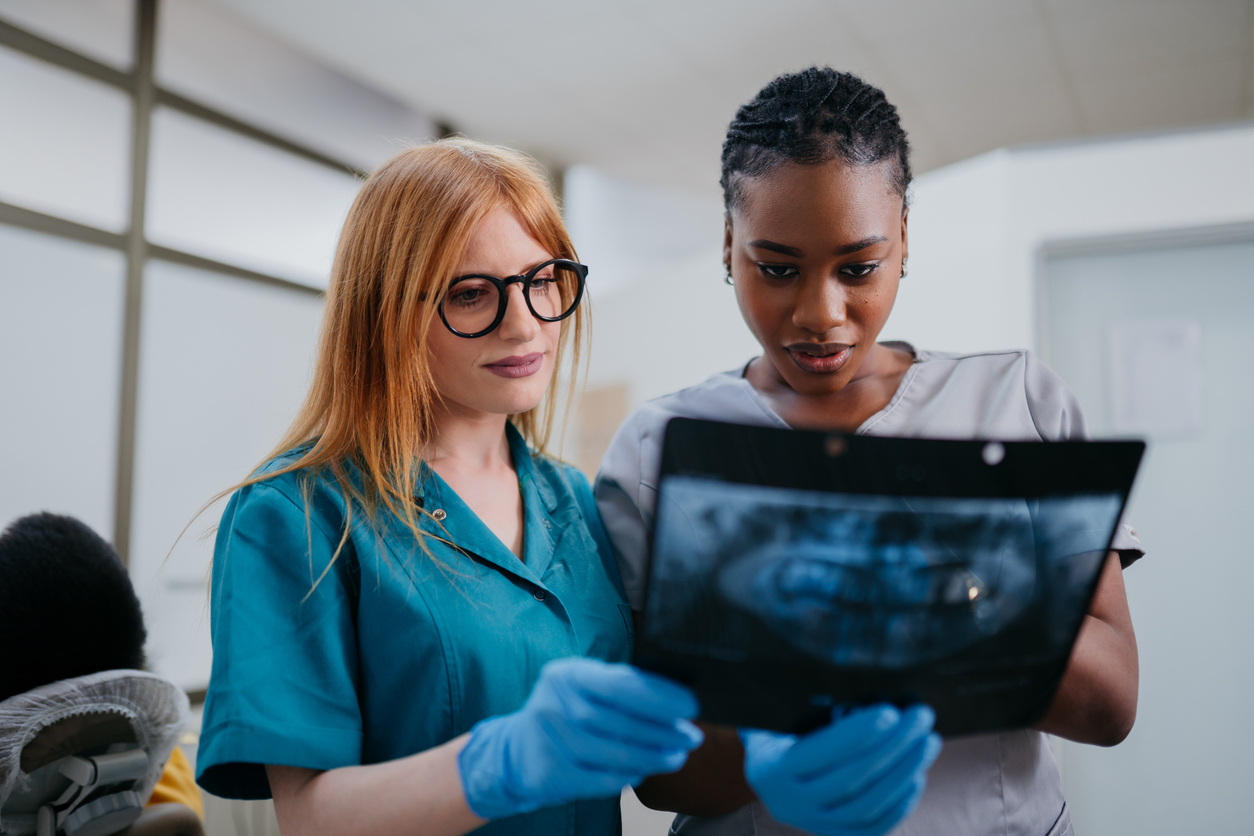
Recent radiographs transfer between offices as digital files, usually by email or secure link. If your last full set was taken within the past year or two, your new dentist in Encino can often work from those instead of retaking everything on day one.
That saves you a little radiation exposure, a little time, and sometimes a line item on the bill. Ask your previous office to send them directly, or request a copy on a flash drive to bring with you.
Older images have value too. Comparing this year’s X-ray to one from four years ago shows whether a shadow is growing or has been sitting there, unchanged, the whole time.
Your insurance benefits move with your plan, not your dentist
Your coverage belongs to your plan, not your old office. Switching dentists doesn’t reset your annual maximum, your deductible, or your frequency limits on cleanings and X-rays.
What does change is how the new office bills. Ask two things before your first appointment: whether they’re in network with your specific plan, and how they handle claims. Coverage varies plan to plan, so have the office verify your benefits before you’re in the chair — our team is happy to walk through yours so there are no surprises.
Your treatment plan moves. Its price tag may not.
If you were quoted for a crown, an implant, or a set of veneers, that plan is information — not a contract. A new dentist will do their own exam and may reach the same conclusion, a different one, or a less invasive one.
That’s not a bad thing. It’s the reason second opinions exist, and it’s especially worth doing before any large or irreversible treatment. Bring the old plan with you and ask the new dentist to walk through the reasoning. Any dentist worth choosing will explain why they agree or disagree.
What doesn’t come with you
Being straight about the tradeoffs:
- Redo policies on previous work. If your old office would have replaced a failing crown at no charge, that goodwill doesn’t transfer. Worth knowing before you leave, especially if something was placed recently.
- In-house membership plans. Discount plans sold by a practice are specific to that practice. Any prepaid balance is a conversation to have with them directly.
- Whatever they knew about you. The fact that you need extra numbing, or that your daughter needs the appointment explained twice before she’ll sit down. That gets rebuilt, and a good office rebuilds it quickly if you tell them upfront.
How to actually make the switch
Five steps, none of them difficult:
- Book your new patient exam first, so you have a date to work toward.
- Call your previous office and request your records and most recent X-rays in writing. Ask them to send directly to the new office when possible.
- Have your insurance card handy so the new office can verify benefits ahead of time.
- Write down anything unresolved — a tooth that’s been sensitive for months, a plan you never started, a filling that never felt right.
- Show up a few minutes early for paperwork.
You don’t need to tell your old dentist why you’re leaving. No explanation is required, and none of this needs to be awkward.
One timing note
If you’re mid-treatment — a crown in progress, an implant healing, aligner treatment underway — don’t switch without talking to both offices first. Sequenced work is much easier to finish where it started. Between treatments is the clean moment to move.
Also worth knowing: unused dental benefits usually expire at the end of the plan year. If it’s fall and you have coverage sitting unused, that’s a good reason to get established somewhere now rather than in January.
Come in and get established
The Dental Office Encino has been on Ventura Boulevard since 1991. Dr. Alan Howard and Dr. Yonatan Howard see patients of every age, from a child’s first visit to implants and full smile restoration, with cone beam 3D imaging, digital X-rays, and CEREC same-day restorations in house. Our team speaks English, Spanish, and Hebrew, and we’re glad to give a second opinion on a treatment plan you received elsewhere.
New patients are always welcome. Book with a dentist in Encino who’ll take the time to read your history before recommending anything.
The Dental Office Encino 17071 Ventura Boulevard, Suite 102, Encino, CA 91316 818-300-0333 Monday–Thursday 8am–5pm | Friday 8am–2pm